The intercom crackles on
M0 proved the chase is fun with nobody talking. M1 installs the person talking. The game now opens on a family newsletter:
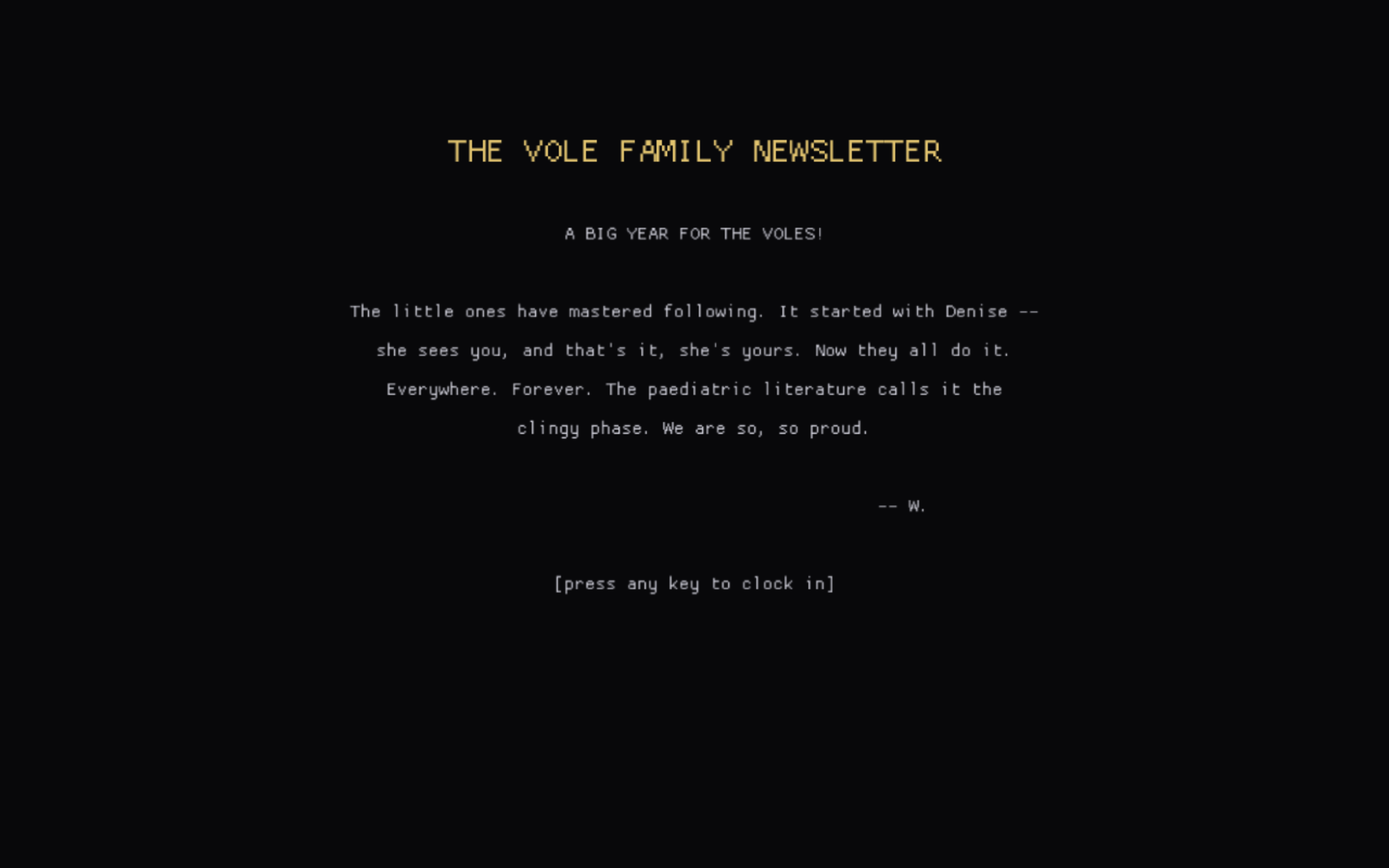
That truthfulness is a design law, not a flavour choice. The newsletter never lies — it’s where the game teaches you, honestly, what this season’s residents are capable of. The intercom, on the other hand:
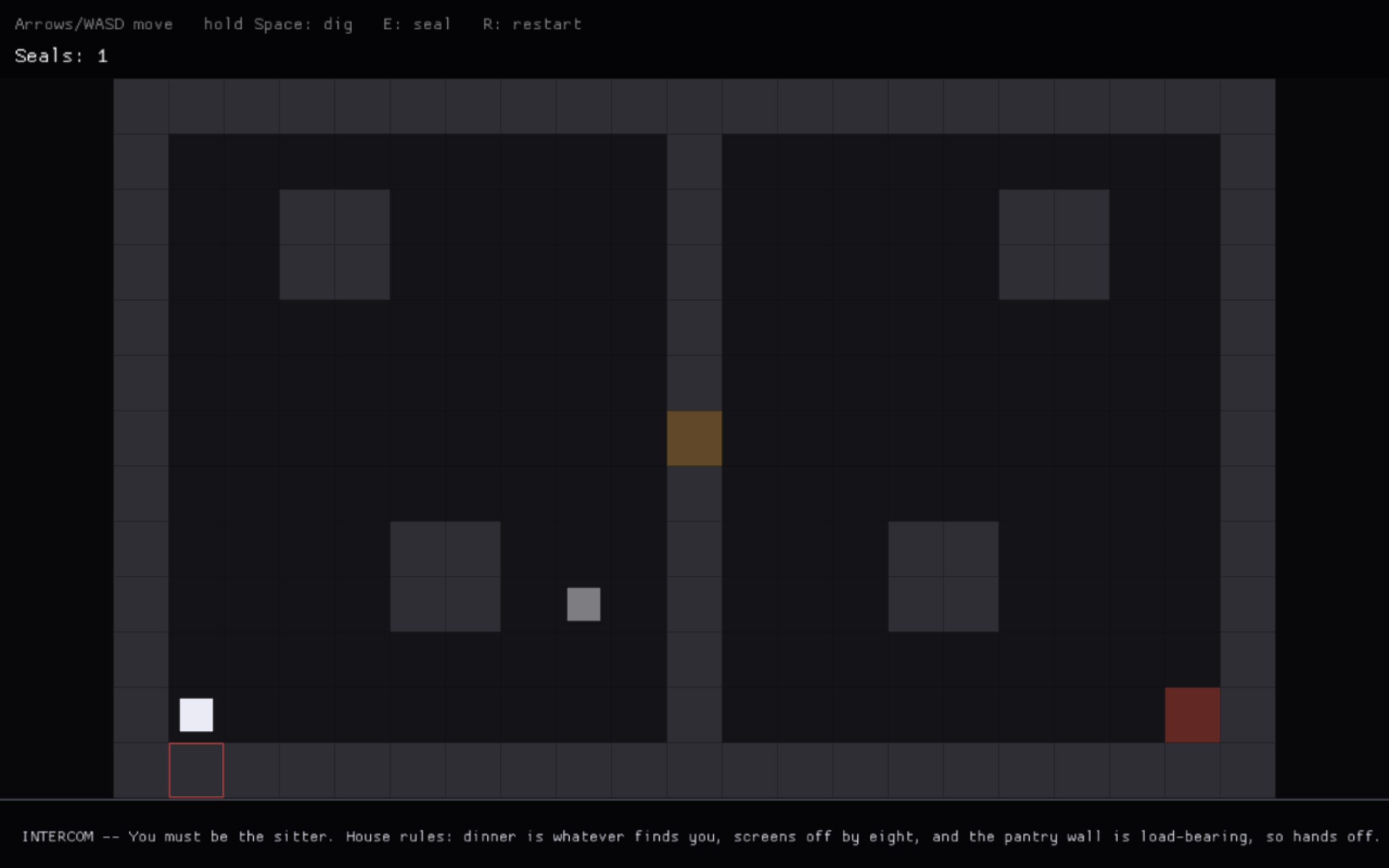
The rule the whole voice is built on: following the intercom’s advice is how you lose. He tells you the pantry wall is load-bearing (it’s the only way through). He tells you the kids hate a shut door (sealing one is the only way out). He tells you to hold still, she’s shy (she is at that moment doing a personal best across the rumpus room directly at you). Every instruction is a fully sincere, warm, terrible idea, and working out which ones to disobey is the actual puzzle. The tutorial is the antagonist. He’d be devastated to hear it phrased that way.
Mechanically, all of it is data and determinism: the sim publishes trigger events (first dig, first chase, sealed, caught, dawdling), the line pools key off those triggers, and selection cycles in authored order — no randomness anywhere, so the same run always produces the same commentary, and the room’s recorded solution stays replayable in tests. The typewriter effect on the bar is pure cosmetics; the simulation neither knows nor cares that anyone is talking.
The bug this milestone was owed
Adding a narrator means drawing more text than this game has ever drawn, and doing it on frame one. That immediately found a real engine bug: the font atlas deletes and rebuilds its GPU texture mid-draw when a new glyph doesn’t fit, and the newsletter — a full screen of fresh glyphs at large sizes — hit exactly that, killing the page with a deleted-texture error. The fix warms the glyph cache before the first draw call of the session. The robot from last post caught it before any human saw it, which is the entire reason the robot exists, and we are being extremely gracious about how smug it’s being.
The robot also got an upgrade, for a sneaky reason worth recording: its “does input actually move the player” check works by pressing a key and diffing frames — but now the first keypress dismisses the newsletter, which changes the whole frame, so the check would have passed forever without testing movement at all. It now clocks in first, then checks that walking works. Verification that quietly stops verifying is worse than none; we wrote that lesson down last time and it held.
Two smaller kindnesses from the first playtest’s notes also shipped: the seal now shows you exactly which cell it will hit before you spend your only charge on the wrong hole, and the exit admits it’s locked from across the room instead of springing it on you at the doorstep.
Next question the game has to answer: does the register carry — do players hear a proud, exhausted father where the writing intends one, and does “disobey him” occur to them unprompted? That one gets answered the same way the last one did: by handing someone the keyboard and saying nothing.