Sixty-two seconds of bait
M0’s whole reason to exist is a three-minute question: is being the bait fun? Today the room met its first human, and we have the tape.
The tape, annotated
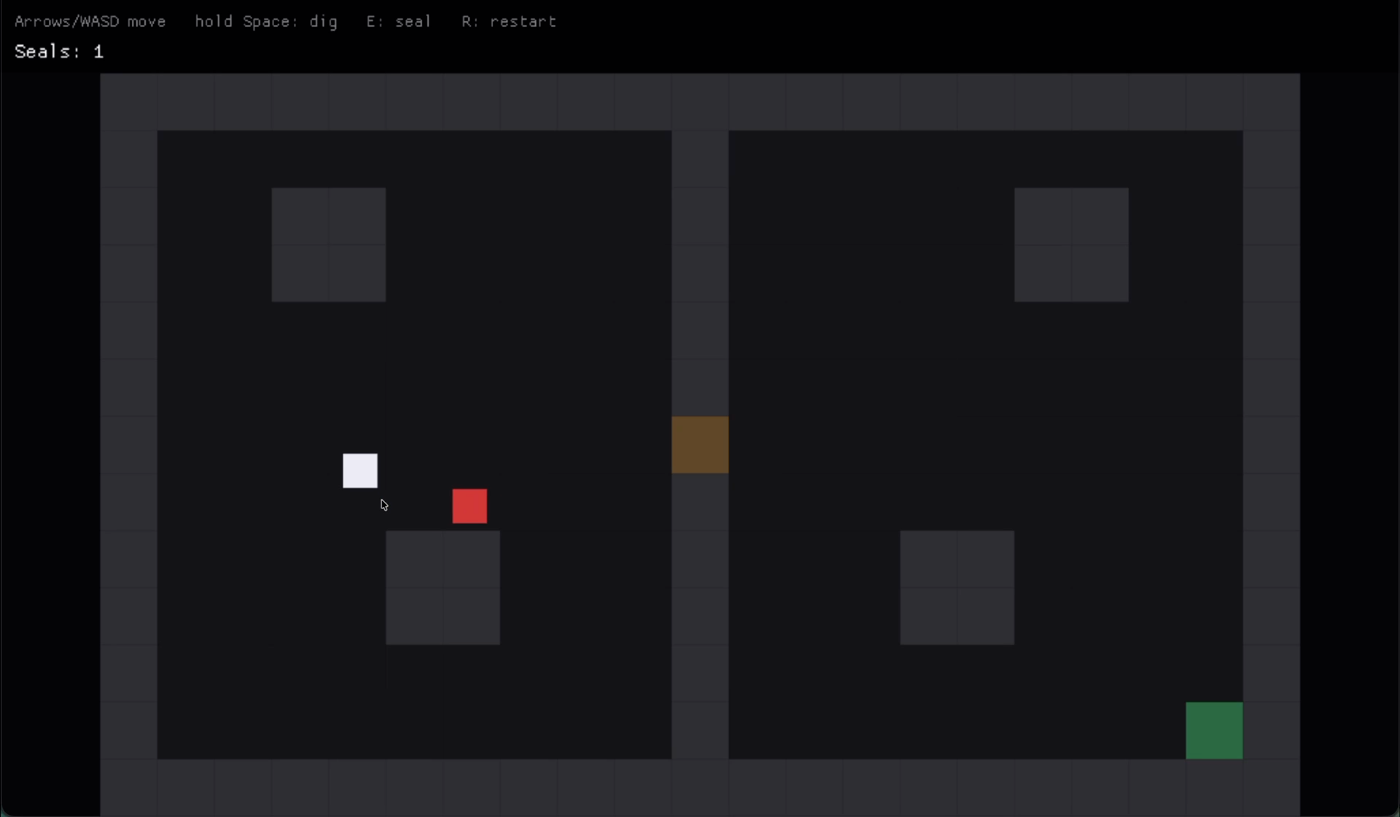
Seconds 0–3. The zombie sees the player almost immediately and goes from grey (hasn’t noticed you) to red (has very much noticed you). The premise — you are the most interesting thing in the room and the room’s other occupant agrees — starts working before the player has finished reading the controls line.
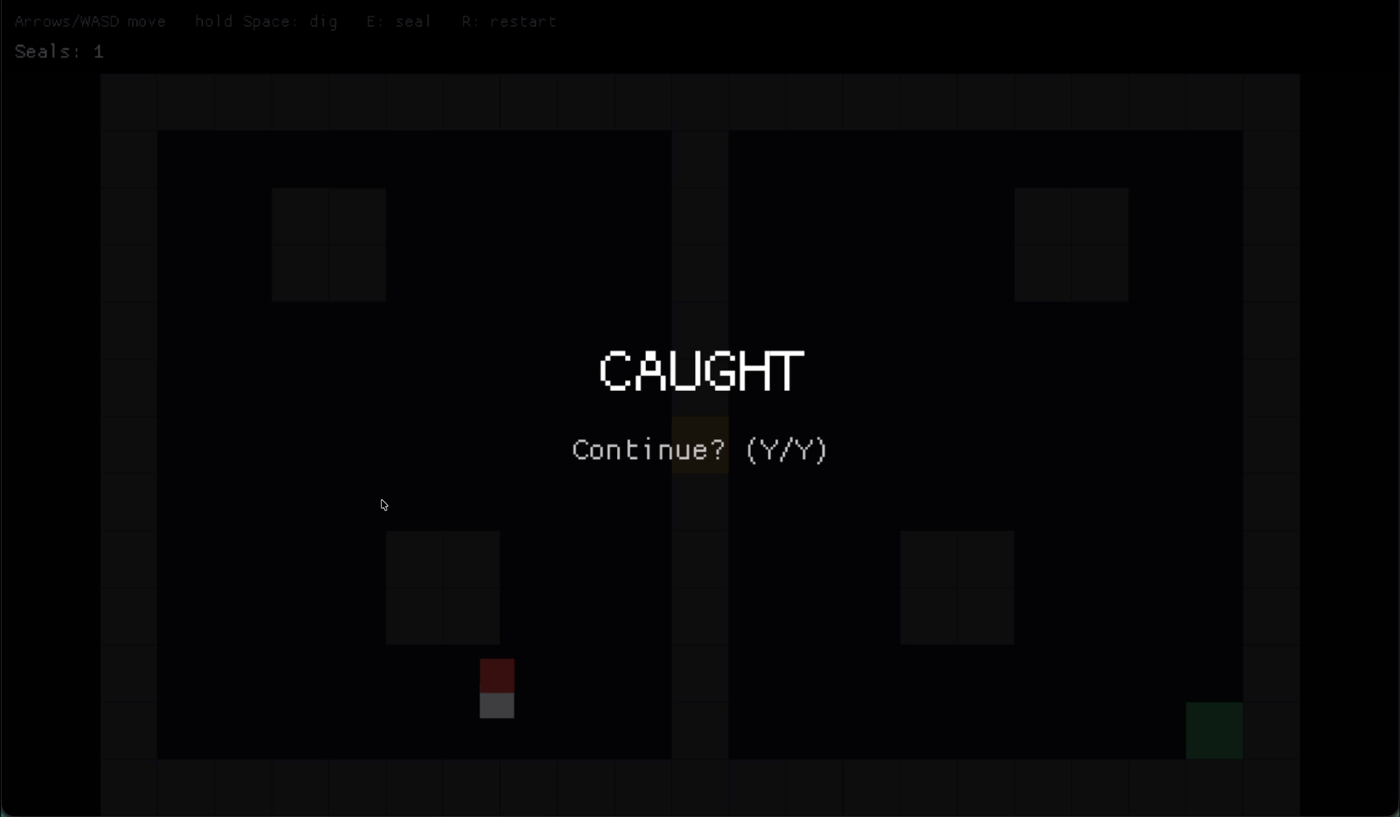
Second 25. CAUGHT. A real one this time — the last post’s death was staged for journalism; this one was earned the traditional way, by a human who was busy thinking about digging while something that never stops walking never stopped walking.
Seconds 26–43. Retry, regroup, and the good part: the player lures the zombie away, doubles back, and digs through the divider — the room’s one soft cell — with the pursuer somewhere behind them. This is the loop the whole game is a bet on: your position is the lure, the tunnel is the plan.
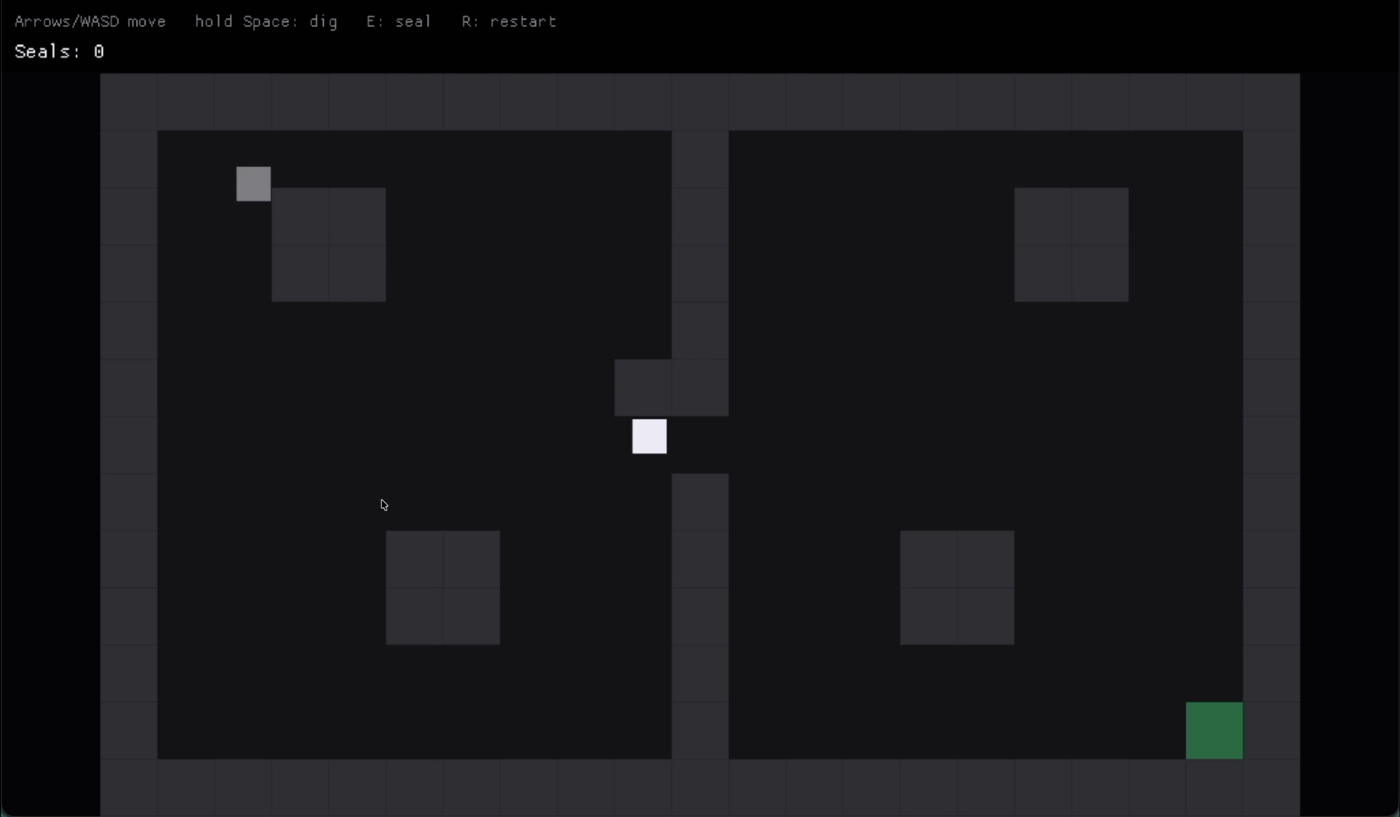
Seconds 43–62. The player crosses to the exit chamber and heads for the green door. The door is gated: it only opens once the zombie is sealed away from you, and the zombie — see previous caption — is extremely not. The one seal charge went into a wall somewhere it wasn’t needed, the tape ends with a reset two tiles from a door that was never going to open, and the room wins on a technicality.
What the tape actually taught us
A first playtest that ends in a clean win teaches you nothing. This one paid out properly:
- Sealing needs a target preview. The seal fires at the cell you’re facing, facing is your last movement direction, and nothing on screen tells you which cell that is until the wall appears. Spending your only charge on the wrong hole shouldn’t be a surprise mechanic.
- The lock needs to be louder. The exit only admits it’s locked when you’re standing on it. The player spent the last twenty seconds walking hopefully at a door that had no intention of opening, and the game just let them.
- The chase itself worked on a human immediately — the noticing, the red, the leading it away to buy digging time. That’s the part no UI fix could have rescued if it had fallen flat, and it didn’t.
The first two are legibility bugs, and they’re next on the bench. The third is the reason there’s going to be more of this game. The verdict on the three-minute question came back from the person holding the keyboard as “this looks good” — which, around here, counts as a standing ovation.